The End of Homework? Andrej Karpathy on the Future of Assessment in the Age of AI
Is homework dead? Andrej Karpathy, one of the world's leading AI experts, argues that schools must stop trying to detect AI usage and shift grading entirely into the classroom. Read about his vision for how AI will reshape teaching methods.

Artificial Intelligence is here to stay, and its impact on the education system is undeniable. Andrej Karpathy, former Director of AI at Tesla and a co-founder of OpenAI, recently shared his thoughts on how schools and universities should respond to this technology. His message is clear: We must stop viewing AI as cheating and start viewing it as a tool that necessitates a new approach to assessment.
Detection is a Futile Task
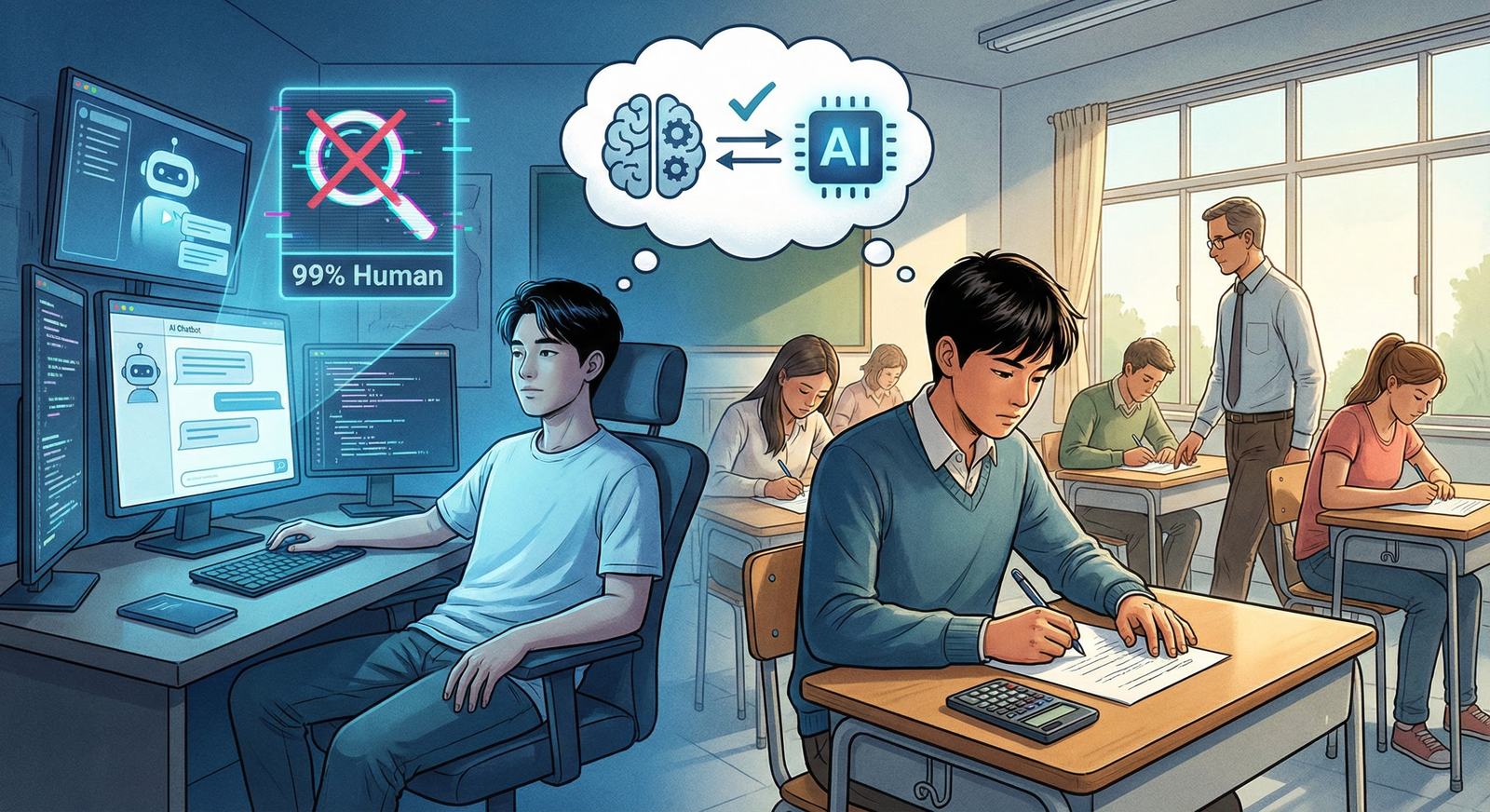
Karpathy points out that attempts to detect the use of AI in homework are doomed to fail. "You will never be able to detect the use of AI in homework. Full stop," says Karpathy. He believes that all so-called "detectors" do not really work and are easily defeated. Therefore, teachers must assume as a fact that any work done outside the classroom has utilized AI.
The "Flipped Classroom" and the Importance of In-Person Learning
Because of this, Karpathy believes that the majority of grading needs to shift into the classroom. By moving the focus from home assignments to work done under teacher supervision, student motivation remains intact. Students know that they will eventually have to demonstrate their skills without assistance during class time.
This is often referred to as the "flipped classroom" model, where time in school is used for project work and assessment, while homework focuses more on preparation.
AI as the New Calculator
The goal, however, is not to ban AI, but to ensure that students are not "naked" in the world without it. Karpathy likens the situation to the arrival of the calculator. Schools still teach basic math so that students understand the principles and can calculate by hand, even though calculators are ubiquitous.
The same principle applies to AI. Students must understand the subject matter to verify the answers the AI provides. "The verification ability is especially important in the case of AI, which is presently a lot more fallible... compared to calculators," Karpathy notes. If a student does not understand the material, they cannot evaluate whether their "prompt" has yielded a correct result.
Conclusion: Proficiency With and Without Technology
Ultimately, it is about balance. Teachers will continue to have the discretion to decide which tools are permitted at any given time, whether it is open book, no devices, or full AI access. The goal is to graduate students who are proficient in using this powerful technology, but who can also stand on their own two feet without it.